
Imagine visiting your father on a Sunday afternoon and noticing his fridge is empty or his medication remains untouched in the box. It is a moment of quiet realisation that the person who once looked after you now needs your help. You want to protect their dignity whilst ensuring they stay safe; however, the fear of them losing their independence or the guilt of not being able to do it all yourself can feel overwhelming. Finding the right home care for elderly parents is not about taking away their freedom but rather providing the tools they need to thrive in the comfort of their own house.
We understand that you are looking for a way to maintain a loving family dynamic without experiencing burnout. You deserve the peace of mind that comes from knowing your loved ones are safe and well supported by professionals who care. This guide provides a clear 2026 checklist to help you identify specific care needs and organise professional assistance tailored to your family. We will walk you through the essential steps to secure reliable support that respects your parents’ wishes and keeps them independent for longer.
Key Takeaways
- Learn how to spot subtle changes in hygiene and nutrition that signal your loved ones might benefit from additional support.
- Use our 2026 family checklist to organise home care for elderly parents that prioritises their safety and personal dignity.
- Understand the importance of professional medication management to ensure your parents remain healthy and independent in their own home.
- Discover how to verify CQC registration and specialist expertise to find a provider that aligns with your family values.
- Gain practical strategies for starting the conversation about care with empathy and respect to maintain a positive family dynamic.
Recognising the signs that your elderly parents need home care support
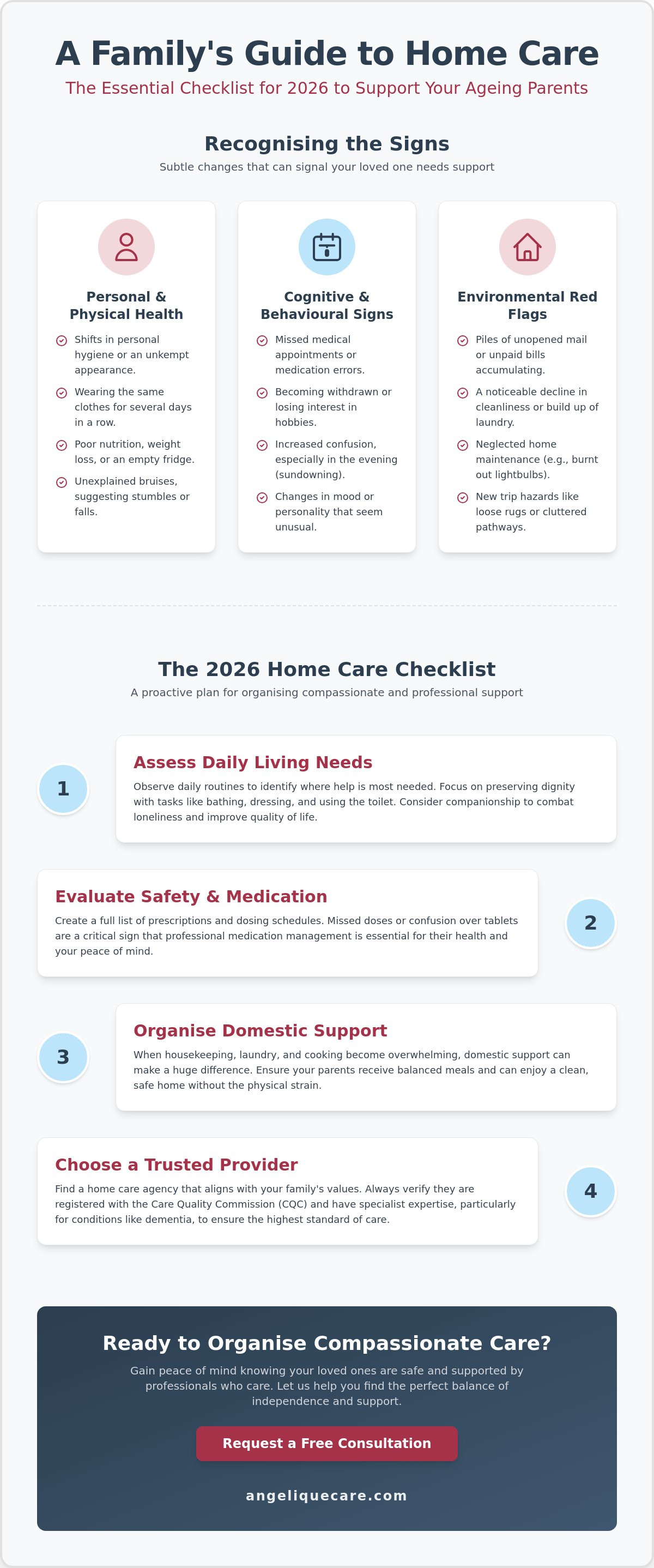
Identifying the exact moment to introduce home care for elderly parents is rarely straightforward. It often begins with a feeling that something is not quite right during your weekly visits. You might notice your mother is wearing the same outfit several days in a row or that your father’s hair looks uncharacteristically unkempt. These subtle shifts in personal care and hygiene are often the first indicators that daily tasks are becoming a struggle. Understanding what is home care? and how it supports these specific needs can help you act before a minor issue becomes a crisis.
Nutritional health is another vital indicator to monitor closely. Open the fridge and look for expired items or a lack of fresh produce. If your parents are missing meals or suddenly losing weight, it might suggest they find cooking or shopping too physically taxing. You should also watch for physical signs like unexplained bruising. This often points to minor stumbles or unsteadiness that they may be too proud to mention during phone calls.
Physical and behavioural changes to monitor amongst seniors
Keep a close eye on cognitive shifts that affect safety. Missed medical appointments or errors with prescriptions are serious red flags that require immediate attention. You might also notice your loved one becoming withdrawn or losing interest in their favourite hobbies. Increased confusion during the evening hours, sometimes called sundowning, is a common sign that professional support is needed to ensure their well being and safety overnight.
Environmental red flags within the family home
The state of the house often reflects the state of the resident. Look for these signs of overwhelm during your next visit:
- Piles of unopened mail or unpaid bills on the kitchen counters
- Laundry building up or a noticeable decline in general cleanliness
- A lack of routine home maintenance such as changing lightbulbs or tidying gardens
When these tasks become too much, it often signals that home care for elderly parents is the most compassionate next step to preserve their independence and dignity.
The essential home care checklist for families in 2026
Once you recognise the signs that help is needed, the next step is building a structured plan. This checklist allows you to move away from reactive decisions and toward proactive support. Evaluating home care for elderly parents requires a balanced look at physical needs and emotional wellbeing. Start by observing their morning and evening routines to see where they struggle most. It is often helpful to use a home safety checklist for seniors to identify physical hazards like loose rugs or poor lighting that increase fall risks.
Assessing daily living and personal care needs
Maintaining dignity is the foundation of any care plan. You should determine if your parent needs help with intimate tasks such as bathing, dressing, or using the toilet. Often, these are the areas where parents feel most vulnerable. Beyond physical tasks, consider if they are experiencing loneliness. Professional companionship can transform their quality of life by providing regular social interaction. You can find more detail on these specific services in our guide to personal care for elderly at home.
Evaluating safety and medication management requirements
Medical safety is a non negotiable priority. Create a comprehensive list of all current prescriptions along with their specific dosing schedules. If you notice missed doses or confusion about when to take tablets, professional medication management becomes essential. Our team often recommends domiciliary care for families who need regular safety checks and clinical oversight. This ensures that health conditions are managed correctly without the need for a care home. If you feel unsure about which level of support is right, you can speak with our care coordinators for expert guidance.
Finally, look at domestic support. Housekeeping and laundry often fall by the wayside as mobility decreases. Meal preparation and nutrition support ensure your parents receive balanced meals every day. Organising home care for elderly parents early allows them to focus on enjoying their home whilst you regain your role as a loving family member rather than a full time carer.
Organising professional support and choosing a home care agency
Deciding to arrange home care for elderly parents is a significant milestone for any family. It requires a delicate balance of practical planning and emotional sensitivity. The transition works best when your parents feel they are leading the process rather than having decisions made for them. By focusing on a person centred approach, you ensure their voice remains at the heart of every choice. This collaborative method helps maintain their dignity and reduces the friction that sometimes arises during these important life changes.
How to discuss care options with your parents
Starting the conversation early is often the best strategy. Focus on the benefits of staying in their own house whilst receiving professional support to remain safe. You should use ‘we’ language to show that you are working together as a team. For example, say “we want to make sure you have everything you need to stay comfortable” rather than “you need help”. It is often easier to start with small changes such as housekeeping or companionship visits. These initial steps build trust and allow your parents to get used to having a carer in their home before more personal care is introduced.
Selecting a person centred care provider in London
When searching for a provider, you must verify their credentials to ensure the highest standards of safety. Always check for current CQC registration as this guarantees the agency meets essential quality regulations. For families in London, finding local expertise is invaluable. You should prioritise agencies that offer specialist training for West London carers, particularly in areas like dementia support. A reliable agency will always provide a tailored care plan designed for the individual rather than a one size fits all service.
Understanding the difference between live in care and visiting support is also crucial. Visiting care provides help at specific times of the day, whereas live in care offers constant reassurance for those with more complex needs. We always recommend requesting a free consultation to meet the team and assess compatibility. This ensures the care provided will truly enhance your parents’ daily life and gives you the confidence that your family is in professional, compassionate hands.
Securing a safe and independent future for your family
Taking the first step toward professional support is an act of love and foresight. By recognising subtle changes in behaviour and using a structured approach to assess daily needs, you ensure that your loved ones remain safe in the environment they know best. Choosing the right home care for elderly parents allows you to step back from the stress of being a primary carer and return to your role as a supportive daughter or son. It provides the essential balance of professional safety and family connection.
As a CQC registered provider, Angelique Care Ltd offers specialist dementia and elderly support across West and North London. Our person centred approach ensures that every care plan is as unique as the individual receiving it. We are ready to help you navigate this transition with quiet confidence and expertise. You can book a free consultation with Angelique Care Ltd to discuss your family needs and discover how we can support your parents’ independence. Let us help you find the peace of mind you deserve whilst ensuring your parents live with dignity and joy.
Frequently Asked Questions
How much does home care for elderly parents cost in London?
The cost of home care for elderly parents in London depends on the unique needs of your family and the frequency of care visits. Since every situation is different, prices are typically calculated after a thorough assessment of the required personal care and medical support. Working with a CQC registered agency ensures you receive high quality care that is transparently managed and tailored to your specific requirements.
Can home care help my parents stay independent for longer?
Professional support is one of the most effective ways to help seniors remain independent in their own homes for a longer period. Carers provide help with challenging physical tasks or medication management which reduces the risk of accidents and hospital admissions. This proactive approach ensures your parents can stay in a familiar environment whilst maintaining their dignity and personal routines.
What is the difference between home care and a care home?
Home care provides professional support within the comfort of a person’s own house, whereas a care home involves moving into a residential facility. Choosing home care allows your parents to keep their cherished possessions and stay close to their local community. It offers a person centred alternative that prioritises individual preferences and maintains the familiar rhythm of daily life without the upheaval of a move.
Is live in care suitable for parents with dementia?
Live in care is highly suitable for individuals with dementia as it offers the stability of a familiar environment and a consistent daily routine. This type of support helps to manage the confusion and distress that can be triggered by changes in surroundings. A dedicated professional can offer constant companionship and specialised behaviour support which is essential for maintaining safety and quality of life.