
Imagine the quiet anxiety that settles in when you leave your mother alone for the afternoon. You wonder if she has managed the bathroom safely or if she has remembered to eat a proper meal. Thinking about personal care for elderly at home often brings a heavy sense of worry, especially when the guilt of not being there every second feels overwhelming. You aren’t alone in this struggle. Most families want to protect the autonomy of their loved ones whilst ensuring they stay safe and healthy in the house they love. It’s natural to feel torn between your professional life and your desire to provide the best possible support for your parents.
Securing professional assistance is not a surrender of independence. It’s a strategic partnership that allows your relative to remain in their familiar surroundings with dignity. This guide explains how expert support provides a clean environment and total peace of mind for your entire family. We will clarify confusing CQC standards and show you how specialised support maintains a sense of autonomy throughout 2026. You will discover practical ways to ensure your loved one stays safe without ever losing their connection to home.
Key Takeaways
- Understand how professional personal care for elderly at home supports daily living tasks whilst ensuring your relative maintains their sense of self.
- Identify the core components of a bespoke care package, including bathing, dressing, and essential medication management.
- Compare the advantages of staying at home against residential options to find the most flexible and cost effective solution for your family.
- Learn the steps for organising a regulated care assessment and creating a plan that prioritises safety and comfort.
- Recognise the value of a person centred provider that brings both compassionate support and high level recruitment expertise to your doorstep.
Understanding Personal Care for Elderly at Home
Personal care for elderly at home is far more than simple assistance with housework. It is a regulated healthcare service designed to support individuals with their Activities of Daily Living, or ADLs. This includes essential tasks such as washing, dressing, and managing personal hygiene. By choosing Understanding Home Care as a primary option, families allow their loved ones to remain in a setting where they feel most secure. The psychological impact of staying at home is profound. Familiar surroundings provide a sense of continuity and comfort that residential facilities often cannot replicate. This continuity is vital for maintaining mental health and emotional stability as we age.
When to Consider Professional Support
The need for help often appears in subtle ways. You might notice your relative is neglecting household chores or showing a sudden change in their personal hygiene. Perhaps their fridge is empty or they seem hesitant to move around the house. Mobility challenges are a significant indicator that it is time for professional intervention. Falls are a leading cause of hospital admissions for seniors. Expert personal care for elderly at home provides the physical support needed to navigate the house safely. This proactive approach prevents accidents and reduces the likelihood of unnecessary hospital stays.
The Legal and Regulatory Framework in the UK
In England, the Care Quality Commission, or CQC, monitors and inspects all providers to ensure they meet strict safety and quality standards. The Care Act 2014 grants every individual the right to a professional care needs assessment through their local authority. It is essential to distinguish between regulated personal care and general home help. Regulated care involves physical contact and health related tasks that require specific training and oversight. General help might include cleaning or shopping but does not provide the clinical safety net that a registered provider like Angelique Care offers. We ensure every carer is trained to meet these high standards whilst focusing on the individual needs of your family member.
What is Included in a Personal Care Package?
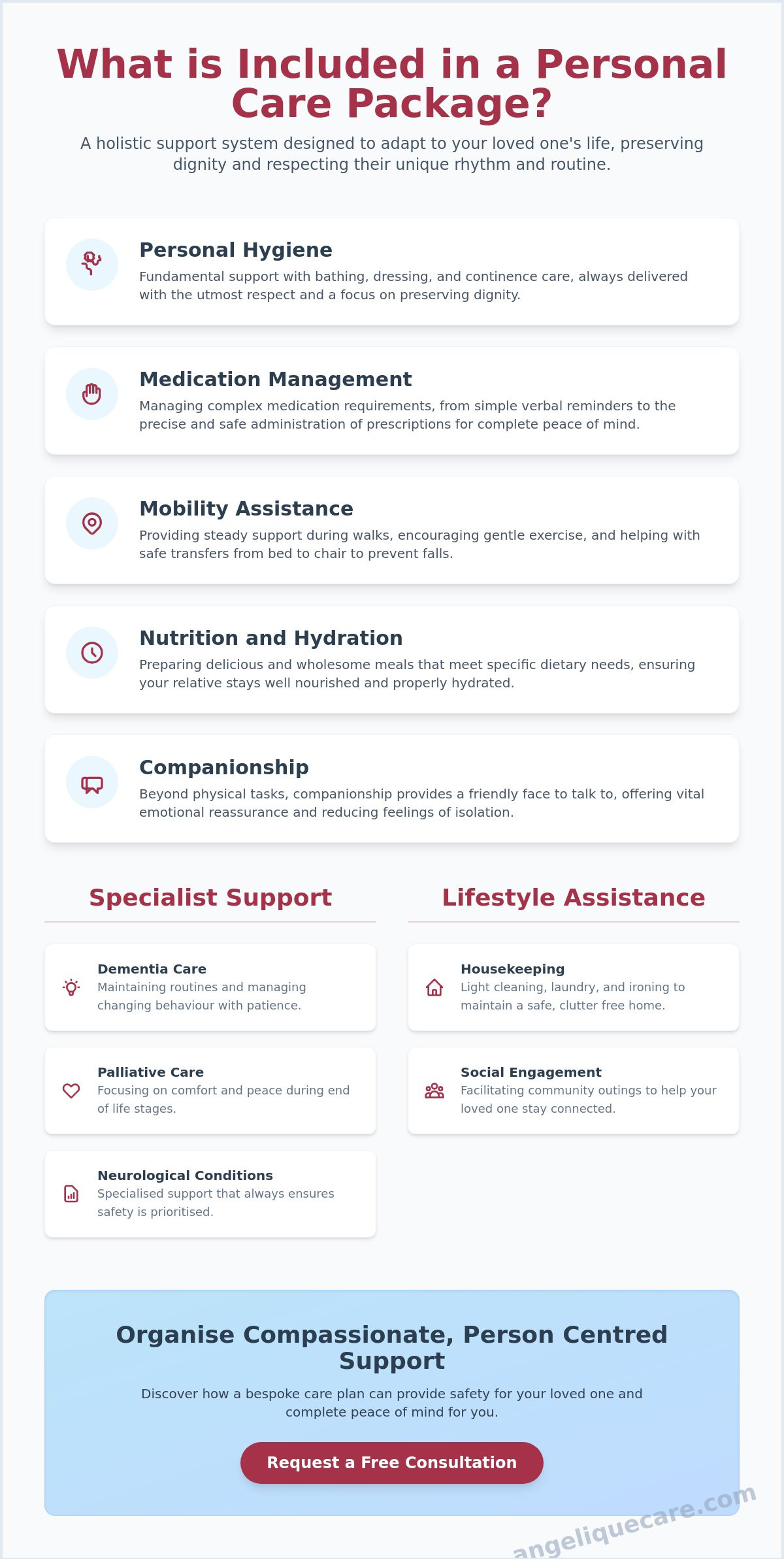
Walking into your parents’ kitchen and finding outdated food or forgotten pills can be a heartbreaking moment of clarity. It signals that the simple tasks they once handled with ease are becoming a burden. A comprehensive personal care package is a holistic support system designed to adapt to this new reality whilst respecting the unique rhythm of your loved one’s life. It goes beyond a simple checklist of tasks. While core hygiene such as bathing, dressing, and continence care are fundamental, they are delivered with a focus on preserving dignity. Carers also manage complex medication requirements. This ranges from simple verbal reminders to the precise administration of prescriptions.
Mobility assistance is another vital pillar. Carers help with safe transfers from bed to chair, encourage gentle exercise, and provide steady support during walks. Nutrition is equally important. We prepare meals that meet specific dietary needs, ensuring your relative stays hydrated and well nourished. Beyond physical tasks, the hidden value lies in companionship. Having a friendly face to talk to provides essential emotional reassurance. If you are exploring these options, our comprehensive personal care services are tailored to meet these diverse needs.
Specialist Support for Complex Conditions
Professional personal care for elderly at home often involves managing specific health challenges. For those living with dementia, carers maintain vital routines and manage changing behaviour with patience. Palliative care focuses on providing comfort and peace during end of life stages. We also provide specialised support for neurological conditions amongst the elderly, ensuring safety is never compromised.
Domestic and Lifestyle Assistance
A safe environment is crucial for independence. Carers handle housekeeping tasks such as laundry, ironing, and light cleaning to maintain a clutter free living space. This reduces the risk of trips and falls. Support also extends outside the house. Carers facilitate social engagement and community outings, helping your loved one stay connected to the world around them. This person centred approach ensures that personal care for elderly at home remains a positive and life enhancing experience.
Comparing Home Care vs. Residential Care Homes
Choosing the right environment for a loved one is a crossroad every family faces. Many people assume that a residential facility is the only way to ensure safety. However, professional personal care for elderly at home often proves to be a more flexible and cost effective solution. Unlike the fixed and often high fees of a care home, hourly home care allows you to pay only for the support needed. This financial flexibility is matched by the quality of attention. In a residential setting, staff must divide their time amongst many residents. Home care provides dedicated one to one support where the carer focuses entirely on your relative. It’s a partnership that prioritises the individual over the institution.
The emotional value of staying at home is immeasurable. Your loved one can keep their pets, their favourite furniture, and their established routines. There is a common misconception that care homes are inherently safer. In reality, a managed home environment with professional oversight provides a high level of security without the stress of relocation.
The Benefits of Live In Care
Live in care is a comprehensive option where a professional resides in the home to provide a 24 hour presence. This service bridges the gap for individuals with higher needs who might otherwise require a nursing home. Having a dedicated carer ensures exceptional continuity of care. The carer learns the subtle preferences and habits of your loved one. This leads to a much deeper human connection and a safer environment.
Maintaining Independence and Autonomy
Independence is about having a choice. Home care allows individuals to dictate their own daily schedule. They decide when to wake up, what to eat, and when to receive visitors. This person centred approach ensures the care adapts to the individual. It doesn’t force them to fit into an institutional routine. Staying at home also means remaining amongst familiar neighbours and family members. This connection to the community is vital for long term well being.
How to Organise Quality Care and Evaluate Providers
Starting the journey toward professional support can feel overwhelming for many families. The first step is always a professional care needs assessment. This detailed evaluation looks at physical health and emotional requirements. It forms the foundation of a bespoke care plan. This document should never be static. A high quality provider ensures the plan evolves as your loved one’s needs change over time. It’s about finding the right fit for your family. This includes carer matching based on personality and shared interests. A strong human connection makes personal care for elderly at home a much more positive experience.
While finding the right fit is universal, the specific regulatory steps vary by location. For instance, if you are researching options in Western Australia, you can check out Elleson Care to see how person centred home care is structured in that region.
When evaluating agencies, look for transparency. Check the latest reports from the Care Quality Commission to ensure they meet essential standards. Authentic client testimonials also offer a window into the daily reality of their service. You want a partner that is responsive and reliable. If you are ready to begin this process, you can book a professional care assessment with our expert team today.
Navigating Hospital Discharge Support
Many NHS trusts now prioritise a Home First approach to recovery. This strategy recognises that patients recover faster in their own beds. However, a rapid home setup is essential to prevent bed blocking. This occurs when a patient is medically fit for discharge but lacks the necessary support at home. Professional hospital discharge support services ensure a safe transition. It provides the immediate personal care for elderly at home required to bridge the gap between clinical care and independent living.
Funding Options for Home Care
Understanding the financial landscape is crucial. In England for the 2026 2027 financial year, the upper capital limit for local authority funding remains at £23,250. If your assets are above this amount, you will likely be responsible for self funding. However, you may still be eligible for non means tested benefits. Attendance Allowance currently provides £76.70 or £114.60 per week depending on the level of care needed. Many families also choose Direct Payments. This allows you to receive funding directly from the council to choose the specific agency that best fits your needs.
Why Angelique Care is the Logical Choice for Your Family
Choosing a provider is a deeply personal decision that requires trust and clarity. At Angelique Care, we believe that personal care for elderly at home should be as unique as the individual receiving it. Our philosophy is entirely person centred. We build our support around the habits, preferences, and history of your loved one. We occupy a unique position in the London care sector because we are both a registered care provider and healthcare recruitment experts. This dual role gives us a distinct advantage. We don’t just find carers; we select the most capable professionals in the industry. Our background in recruitment means we understand the exact skills required for high level support. We look for a rare blend of technical skill and genuine human empathy.
Our services cover every level of need. Whether you require a few hours of companionship or comprehensive 24 hour live in care, our team is prepared to assist. We provide mobility support, medication management, and nutritional help with clinical precision. This ensures that personal care for elderly at home is delivered by someone who truly cares about the well being of your relative.
Our Commitment to Quality and Training
Our recruitment expertise ensures we only hire the top tier of carers. Every staff member undergoes a rigorous vetting process that exceeds standard requirements. We invest heavily in ongoing professional development. This includes specialised training in medication management and mobility assistance. Our team is always ready to respond to changing situations with quiet confidence. This proactive approach means we anticipate needs before they become urgent. We maintain the highest standards of safety whilst delivering care with a gentle and supportive touch.
Taking the First Step Towards Peace of Mind
We invite you to a no obligation consultation to discuss the specific needs of your family. Transparency is at the heart of our communication. We keep you informed about every aspect of the care plan. You will always know who is entering your home and what tasks they are performing. We are here to alleviate your stress and provide the professional safety net your loved one deserves. Contact Angelique Care today to discuss a tailored plan for your loved one.
Empowering Independence Through Personalised Support
Choosing personal care for elderly at home is a decision that transforms the quality of life for your entire family. You have explored how professional assistance maintains dignity whilst ensuring safety in a familiar environment. We have discussed the vital role of bespoke care plans and the profound psychological benefits of staying amongst loved ones. High quality support allows your relative to dictate their own schedule and remain connected to their community. It turns a period of uncertainty into a season of security and growth.
Angelique Care is a CQC Regulated Provider with expert healthcare recruitment standards. We are also a specialist in hospital discharge support services; ensuring no one stays in a clinical setting longer than necessary. Our team is ready to guide you through every stage of this journey with compassion and clinical expertise. You don’t have to face these challenges alone. We invite you to Arrange a Compassionate Care Assessment with Angelique Care Ltd today. Let us help you create a safe and nurturing environment where your loved one can truly thrive.
Frequently Asked Questions
What is the difference between personal care and companionship?
Personal care involves physical assistance with tasks such as bathing, dressing, and continence care. Companionship focuses on emotional support and social interaction to prevent loneliness. Whilst personal care requires specific training for health related tasks, companionship is about building a relationship and providing a friendly presence. Both services work together to ensure your relative feels supported and connected whilst maintaining their dignity.
How much does personal care for the elderly at home cost in the UK?
Costs for support vary based on the specific needs and the frequency of visits required. Factors such as the level of specialist skill needed and whether you choose hourly support or live in care will impact the total. We provide a transparent breakdown of fees following a professional care needs assessment to ensure you have a clear understanding of the investment involved for your family.
Can personal care be provided for just a few hours a week?
Yes, personal care for elderly at home is highly flexible and can be tailored to your schedule. You can arrange for a carer to visit for just a few hours a week to help with specific activities of daily living. This level of support is ideal for those who only need a small amount of assistance to maintain their independence and safety in their own surroundings.
What happens if our regular carer is unwell or on holiday?
We operate a reliable system to ensure your care is never interrupted. If your regular carer is unwell or takes a holiday, we provide a qualified replacement who is fully briefed on your care plan. Our recruitment expertise allows us to maintain a dedicated team of professionals who are always ready to step in and provide seamless support for your loved one.
Is personal care available for people with advanced dementia?
Specialised personal care is available for individuals living with advanced dementia. Carers receive specific training to manage changing behaviour and ensure a safe environment whilst respecting the dignity of the person. This person centred approach allows many individuals with complex needs to remain in their own homes for much longer than they might in a residential setting.
How quickly can home care support be started after a hospital discharge?
Support can often be organised rapidly to facilitate a safe return home from hospital. We work closely with discharge teams to ensure that the necessary equipment and care are in place the moment the patient is ready. This rapid response helps prevent bed blocking and ensures a smooth transition to recovery in familiar surroundings where the individual feels most comfortable.
Does the council pay for personal care at home?
Local authorities provide funding based on a means tested assessment of your assets. In England for the 2026 2027 financial year, the upper capital limit is £23,250. If your savings are below this threshold, the council may pay for your personal care for elderly at home. Those with assets above this limit are typically responsible for their own funding through private arrangements.
How do you ensure the safety and background of your carers?
Every carer undergoes a comprehensive vetting process to ensure the highest standards of safety. This includes an enhanced DBS check and thorough verification of their professional references and work history. As a CQC regulated provider, we adhere to strict recruitment protocols to ensure that every member of our team is both technically capable and personally reliable for your peace of mind.