
For many families in London, the hardest conversation isn’t about finances or health but about where an ageing parent will sleep at night. You want the absolute best for your loved one, yet deciding between live in care vs care home support often feels like a trade off between safety and the comfort of home. It’s natural to feel a heavy sense of guilt when considering a move, or perhaps you’re anxious about whether a residential facility can truly offer the individual attention your parent deserves. We understand that this decision is deeply personal and often overwhelming.
This guide will help you weigh up your options by looking at the specific needs of your family in 2026. You’ll discover the essential factors for choosing between residential facilities and professional support at home to ensure your relative remains happy and safe. We’ll provide a clear understanding of the logistical differences and costs, helping you find a solution that protects the dignity and independence of the person you love.
Key Takeaways
- Understand the core differences between residential facilities and professional support provided in the comfort of a private residence.
- Use our family checklist to weigh up live in care vs care home benefits for specific needs such as medication management and mobility.
- Learn how to preserve the independence of your loved one by keeping them in familiar surroundings with their pets and gardens.
- Discover the value of a person centred care plan that evolves as health requirements change over time.
- Find out how to introduce professional support into your London home whilst maintaining the privacy and routines of the whole family.
Comparing Live In Care And Care Homes For Your Loved One
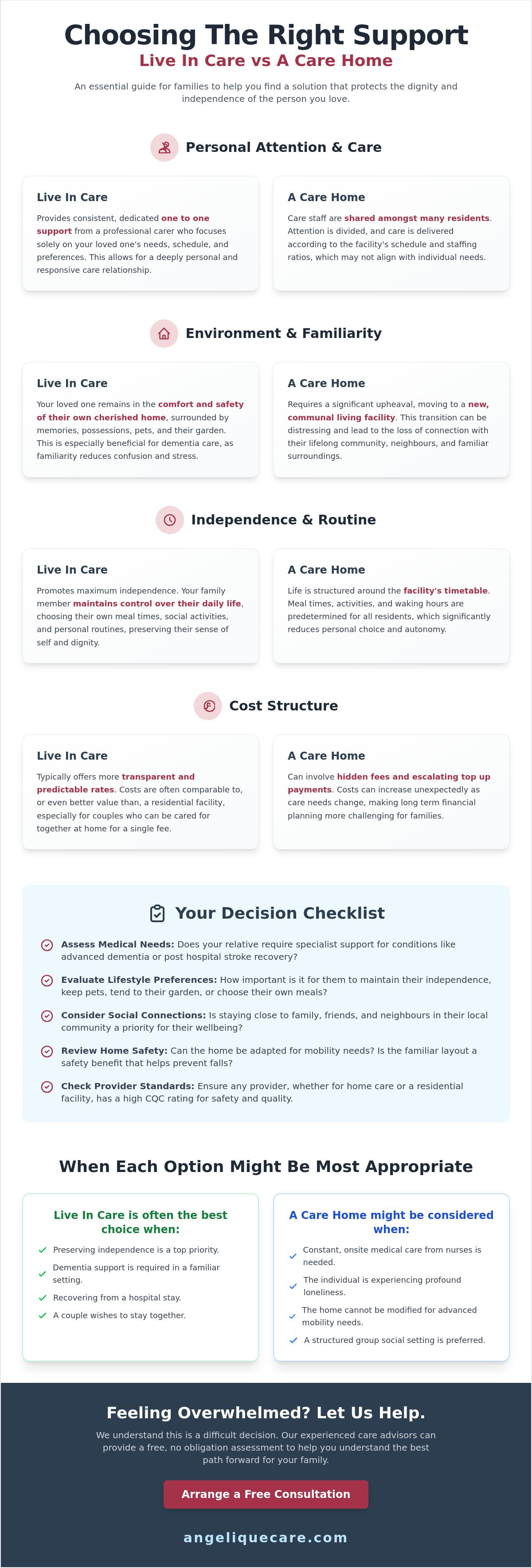
The choice between a residential facility and home support is often the most significant decision a family will make. When evaluating live in care vs care home options, the primary distinction lies in the environment. A care home requires your relative to move into a communal setting. In contrast, home care brings a professional into their existing space. This allows for a person centred routine where breakfast is served when they want it, not when the kitchen opens.
For those living with dementia, the transition to an institutional setting can be distressing. Familiarity is a powerful tool for cognitive stability. Staying at home helps maintain vital links to friends and neighbours in local communities like Acton or Brentford. This continuity of social life is often lost in a facility where residents are separated from their lifelong surroundings. What is a live-in caregiver? They are professionals who provide one to one support, ensuring your parent stays connected to their world.
The Benefits Of Staying In A Familiar Environment
The comfort of a favourite armchair or the known layout of a kitchen isn’t just about sentiment. It’s about safety. Knowing exactly where every cupboard and doorway is located helps prevent falls. Surrounding a loved one with cherished possessions and memories preserves their sense of ownership and dignity. Home environments are proven to support better outcomes for those recovering from hospital stays by reducing the stress associated with new clinical settings.
When A Care Home Setting Might Be Considered
There are instances where a residential facility is appropriate. If your loved one requires constant medical intervention from multiple onsite nurses, a nursing home may be a clinical necessity. Some seniors also benefit from the structured social activities found in group settings, especially if they are experiencing profound loneliness. Additionally, very old properties across North London can sometimes be difficult to modify for advanced mobility needs, making a purpose built facility a practical choice.
Your Decision Checklist For Selecting The Right Support
Comparing live in care vs care home services requires a thorough look at your family’s priorities. Start by assessing the level of one to one attention your parent needs for daily tasks. In a residential setting, staff members are shared amongst many residents. A dedicated home carer focuses only on your loved one. This is vital for complex medication management or mobility assistance. If you are unsure which level of support fits best, you can request a professional assessment from our team.
Evaluate the total cost of each option carefully. Care homes often have hidden fees such as top up payments that can increase over time. Home care typically offers more transparent rates. It is also essential to check the CQC rating of any provider to ensure they meet high standards of safety. The NHS guide to choosing a care home is an excellent resource for understanding these standards.
Assessing Medical Needs And Personal Safety
Identify if your relative needs specialist support for stroke recovery or advanced dementia care. Review the home layout for potential hazards that might require professional equipment. Robust medication management is also a priority to prevent errors. These clinical factors often determine if staying at home is a safe long term option.
Evaluating Lifestyle Preferences And Social Connections
Does your parent value their independence? Many seniors want to choose their own meal times or keep their pets. Proximity to family in West London is also a major factor. Frequent visits are much easier when your loved one remains in their own community. You can learn more about how these support levels work by reading our guide on personal care for elderly at home.
Transitioning To Professional Care In London
Deciding on the right support is about more than logistics. It involves integrating a new professional into the home whilst respecting long established boundaries and family privacy. This is where the choice of live in care vs care home services becomes a matter of lifestyle preservation. A dynamic care plan is the foundation of this process. It must be regularly reviewed to reflect changes in health or personal preferences. Local providers in Fulham and Hammersmith offer a distinct advantage because they are deeply rooted in the community and can respond to urgent requests with a personal touch that large corporations often lack.
Companionship is another critical element that helps prevent family burnout. By allowing a professional to manage the physical demands of care, family members can focus on emotional connection and quality time. You can find further guidance on navigating these shifts in Age UK’s care home checklist, which offers a structured way to evaluate different support environments and financial considerations.
How Angelique Care Ltd Supports Your Family Journey
We specialise in person centred support that prioritises the dignity and independence of every individual. Our recruitment process is exceptionally rigorous, ensuring that every carer is not only highly trained but also shares our values of compassion and respect. For families facing an urgent need after a medical procedure, we provide hospital discharge support services to facilitate a smooth and safe transition back to familiar surroundings.
Arranging A Free Consultation For Personalised Care
We invite families across North and West London to reach out for a no obligation discussion about their unique circumstances. Starting the process is straightforward and begins with a conversation with our dedicated team. We are committed to being a reliable and empathetic partner for every family we serve, ensuring that your loved one receives the highest standard of professional care in the place they feel most comfortable.
Securing A Dignified Future For Your Family
Choosing the right path between live in care vs care home support is a significant milestone for any family. It is ultimately about ensuring that your relative continues to live with the respect and comfort they deserve. We have discussed how maintaining a familiar routine in London can improve mental well being whilst providing the necessary safety through professional assistance. By focusing on person centred care, you can protect their independence and keep them connected to the local community they have always known.
As a CQC registered provider with specialised expertise in dementia and elderly care, Angelique Care Ltd is dedicated to supporting families across West and North London. Our team understands the nuances of home support and is ready to provide the compassionate guidance you need during this transition. We believe that every individual deserves a care plan as unique as their own life story.
Book your free care consultation with Angelique Care Ltd today. We are here to act as your reliable partner in providing the very best for your loved one.
Frequently Asked Questions
Is live in care safer than a care home for someone with dementia?
Live in care is often safer for individuals with dementia because it allows them to remain in a familiar environment with a consistent routine. When weighing up live in care vs care home options, the dedicated one to one attention at home helps prevent the confusion and agitation that often leads to falls. Staying in a known space reduces the risk of wandering and ensures that the individual feels secure amongst their own possessions.
How do the costs of live in care compare to residential care in London?
Comparing the costs of live in care and residential care in London depends on the specific level of support required for the individual. For a single person, the fees are often very similar, but live in care becomes much more cost effective for couples who wish to stay together. You are paying for direct professional support rather than the overheads associated with maintaining a large residential facility.
Can a live in carer assist with medication management and mobility?
Yes, a professional live in carer is trained to provide expert assistance with both medication management and mobility. They follow a strict care plan to ensure that all prescriptions are administered safely and on time. This dedicated support also includes physical aid with walking or transferring, which significantly reduces the risk of accidents within the home.
What happens if the live in carer needs a break or goes on holiday?
We arrange for a qualified relief carer to step in whenever your regular professional takes a holiday or requires a scheduled break. This ensures that your loved one always has the support they need without any interruption to their care. Our management team handles all the logistics to make sure the relief carer is fully briefed on the specific routines and preferences of your family.