
For many families in London, the moment of realisation happens during a Sunday roast or a quick midweek visit. You notice your mother is struggling with the stairs, or perhaps the kitchen cupboards are looking a little bare. While domiciliary care offers a way to keep her safe at home, the thought of any outside help can feel like a betrayal of her independence. You want her to stay in her familiar surroundings, but you cannot ignore the growing safety concerns. It is a heavy burden to carry alone.
We understand that this is one of the most emotional decisions you will ever make for your loved one. It is natural to feel a sense of guilt when considering care options, but professional support often means your parent can stay independent for much longer. This comprehensive guide will help you compare different support models and understand the specific benefits of home based assistance. We will explore how to find a reliable London agency that prioritises professional medication management and personal care. By the end of this article, you will have the clarity needed to make a confident choice for your family’s future.
Key Takeaways
- Learn how professional support at home allows your loved one to remain independent whilst receiving the help they need in familiar surroundings.
- Understand the flexibility of domiciliary care which ranges from brief weekly visits to multiple daily calls tailored to specific requirements.
- Discover why a residential facility is not the only safe option for mobility issues and how staying in a local community benefits mental wellbeing.
- Identify the essential credentials to look for in a provider including CQC registration and a commitment to professional medication management.
- Gain insights into the home assessment process and how local care managers work with families to create person centred support plans.
What is Domiciliary Care and How Does it Support Independent Living?
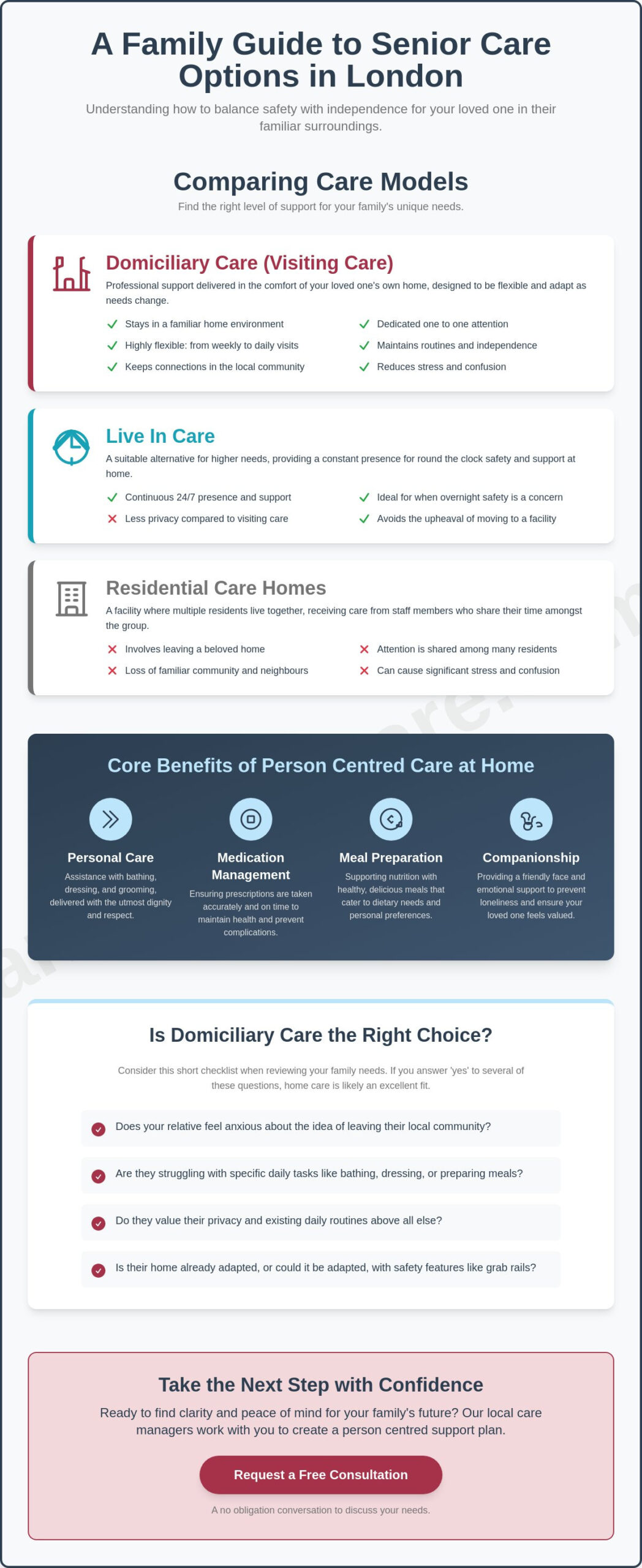
Professional support at home provides a vital lifeline for families who want to balance safety with independence. When we ask What is Domiciliary Care? we are describing a service that brings expert help directly to your doorstep. It allows your loved one to stay in the place they know best whilst receiving the assistance they require. This is not a rigid or one size fits all solution. Instead, domiciliary care is built entirely around the individual needs of the person receiving support.
The flexibility of this service is its greatest strength. You might find that a single hour of help each week is enough to manage the laundry or a trip to the shops. Other families choose several visits a day to assist with more intensive requirements. This adaptable nature ensures that care grows alongside the needs of your relative. It provides peace of mind for the whole family without taking away the autonomy of the individual.
Local connections are essential for emotional well being. For seniors living in communities like Hanwell and Acton, staying at home means keeping their place in the neighbourhood. They can continue to visit their favourite local park or chat with neighbours they have known for decades. Maintaining these social roots is just as important as physical health. Carers provide the necessary support to make these daily joys possible through several key tasks:
- Personal Care: Assisting with bathing, dressing, and grooming whilst maintaining the highest levels of dignity and respect.
- Medication Management: Ensuring that all prescriptions are taken accurately and on time to prevent health complications.
- Meal Preparation: Supporting nutrition by preparing healthy meals that cater to specific dietary needs and preferences.
The Core Benefits of Person Centred Care at Home
A tailored care plan is the foundation of effective support. It respects individual routines and protects the favourite habits that make life meaningful. Whether it is a specific morning ritual or a preferred way of organising the kitchen, these details are always honoured. Staying in a familiar environment also reduces the significant stress and confusion that often follows a move to a residential facility. This stability is particularly beneficial for those living with early stage dementia.
Companionship is another vital element of this support model. Beyond the clinical tasks, carers provide emotional support and a friendly face. This human connection is essential for preventing loneliness amongst the elderly. It ensures that your loved one feels seen, heard, and valued every single day in the comfort of their own home.
Comparing Domiciliary Care with Residential Care Homes and Live In Care
Families in West London often face a difficult choice between visiting support and residential facilities. According to the official definition of domiciliary care, this support is designed to help people live as independently as possible. Many believe that a residential care home is the only safe environment for someone with mobility issues. However, modern equipment and professional mobility assistance allow seniors to remain safe in their own homes. Staying put avoids the emotional trauma of leaving a beloved property and a familiar neighbourhood.
One major difference is the level of attention provided. In a residential home, staff members share their time amongst many residents. With domiciliary care, your loved one receives dedicated one to one attention for the entire duration of the visit. If requirements grow to the point where safety is at risk overnight, live in care becomes a more suitable alternative to visiting calls. This provides a constant presence whilst still avoiding the upheaval of a move. It ensures that a professional is always ready to help with medication management or personal care at any hour.
Making the Right Choice for Your Loved One in London
Evaluating your current situation helps determine the best path forward. Consider this short checklist when reviewing your family needs:
- Does your relative feel anxious about the idea of leaving their local community?
- Are they struggling with specific daily tasks like bathing or dressing?
- Is their home already adapted with grab rails or other safety features?
- Do they value their privacy and existing daily routines above all else?
This support model is uniquely scalable. You can start with light housekeeping and increase to more intensive personal care for elderly at home as health needs change over time. If you feel unsure about which level of support is best for your specific situation, you can always speak with a care coordinator for professional guidance and reassurance.
Selecting a Quality Domiciliary Care Provider and Starting the Journey
Finding the right support for an ageing parent is a significant step that requires careful thought. You must prioritise choosing a provider that is fully CQC registered. This certification ensures the agency meets essential safety and quality standards across North and West London. When Selecting a Quality Domiciliary Care Provider, you should ask about their specific experience with families in your local community. A provider with local expertise can respond quickly to changing needs and understands the local resources available to your loved one.
The journey to better support usually begins with a thorough home assessment. During this meeting, care managers visit the property to discuss specific requirements with the family. This is a vital opportunity to share details about your relative’s personality, routines, and preferences. It ensures the resulting support plan is truly person centred and respects the dignity of the individual. This collaborative approach helps build trust between the family and the care team from the very first day.
Expertise is essential when managing complex health conditions. You should look for carers who have received specialist training in areas like dementia care and mobility assistance. These skills are vital for maintaining safety whilst encouraging independence. Furthermore, practical help with housekeeping and meal preparation creates a secure and healthy home environment. A tidy house and nutritious food prevent accidents and support physical health, allowing your relative to focus on their well being in the place they love most.
While this guide focuses on the UK, the need for dedicated support is universal. For those researching high-quality disability services in Australia, you can visit Accessible Care to see how they provide specialised NDIS care in Melbourne and Adelaide.
Professional Support for Hospital Discharge and Specialist Needs
The need for domiciliary care often becomes urgent when a relative is ready to leave a hospital in Hammersmith or Fulham. The transition from a busy clinical ward to a quiet home can be a vulnerable time for seniors. Professional support facilitates a safe return and helps prevent the stress of a potential readmission. By having a trained carer ready to assist with medication and personal care the moment they arrive home, you provide the best possible foundation for recovery. For families navigating this difficult transition, our hospital discharge support services guide provides the practical advice needed to manage the crisis effectively.
Taking the First Step Toward Professional Support at Home
Choosing domiciliary care is more than just a practical decision; it is a commitment to your loved one’s comfort and dignity. You have seen how professional support at home preserves independence whilst offering a safer alternative to residential facilities. By selecting a provider that offers one to one attention, you ensure your relative remains connected to their local community and daily routines. This tailored approach provides the peace of mind every family deserves during a challenging time.
Angelique Care Ltd is a CQC registered provider dedicated to maintaining high standards of safety and professional care. Our team brings specialist expertise in dementia and elderly support across London, ensuring that every individual receives the respect they deserve. We believe in a person centred approach that prioritises the well being of your relative at every stage of their journey. You don’t have to manage these complex decisions without guidance. Book a free consultation with our compassionate West London team today to discuss how we can support your family. We are ready to help you create a safe and nurturing environment for the person you love most.
Frequently Asked Questions
What is the difference between home care and domiciliary care?
There is no functional difference between these two terms. Domiciliary care is the formal industry name for professional support provided within a person’s own home. Both phrases refer to a service where a trained carer visits to assist with daily living tasks and personal requirements. Whether you call it home care or support at home, the primary goal remains the same. It is about keeping your loved one independent and safe in familiar surroundings.
How much does domiciliary care cost per hour in London?
Rates for domiciliary care in London are influenced by several specific factors. The complexity of the medical needs and the frequency of the visits play a major role in determining the final rate. Specialist requirements such as dementia support or assistance with mobility equipment may also affect the cost. Many families find this visiting model more affordable than residential options because you only pay for the time you actually need.
Can domiciliary care help with medication management and personal care?
Yes, assisting with medication management and personal care is a core part of the service. Carers receive specific training to help with bathing, dressing, and grooming whilst maintaining the highest levels of respect. They also ensure that prescriptions are taken accurately and on time to prevent health issues. This professional support allows your relative to maintain their daily hygiene and health routines without the stress of managing everything alone.
Is domiciliary care safe for someone with advanced dementia?
Professional support at home is a safe and effective option for those with advanced memory loss. Carers with specialist training understand how to manage the unique behaviours and safety risks associated with dementia. For those who require constant supervision, domiciliary care can be adapted into a live in arrangement. This provides a continuous presence in a familiar setting which often helps to reduce the confusion and anxiety common in advanced stages.