
Imagine your mother sitting in her favourite garden chair, enjoying the afternoon sun whilst a carer prepares a meal that respects her lifelong tastes and routines. This is the essence of person centred care. It is an approach that sees the individual first and the medical condition second. You likely worry that professional support might strip away your loved one’s identity or force them into a rigid, clinical system. Many families in London share this anxiety, feeling overwhelmed by complex healthcare jargon and the fear of losing control over their relative’s daily happiness.
We understand that you want more than just a service; you want a partnership that honours a life story. In this article, you will discover how person centred care prioritises the unique needs and dignity of your loved one to ensure a better quality of life at home. We provide a clear roadmap to help you evaluate care providers and offer practical knowledge so you can advocate for your family with confidence. You will learn exactly what this approach looks like in practice and how it brings lasting peace of mind to your entire family.
Key Takeaways
- Learn why a bespoke approach is vital for maintaining the identity and dignity of your loved one during their care journey.
- Discover how person centred care improves physical health outcomes and reduces feelings of isolation by focusing on individual preferences.
- Understand the specific criteria to look for when evaluating London care providers to ensure they respect your family member’s life story.
- Gain practical knowledge to help you advocate for a care plan that involves both the individual and the family in every decision.
- Find out how to achieve peace of mind knowing that professional support will adapt to your relative rather than forcing them to change.
What is person centred care and why is it essential for home support?
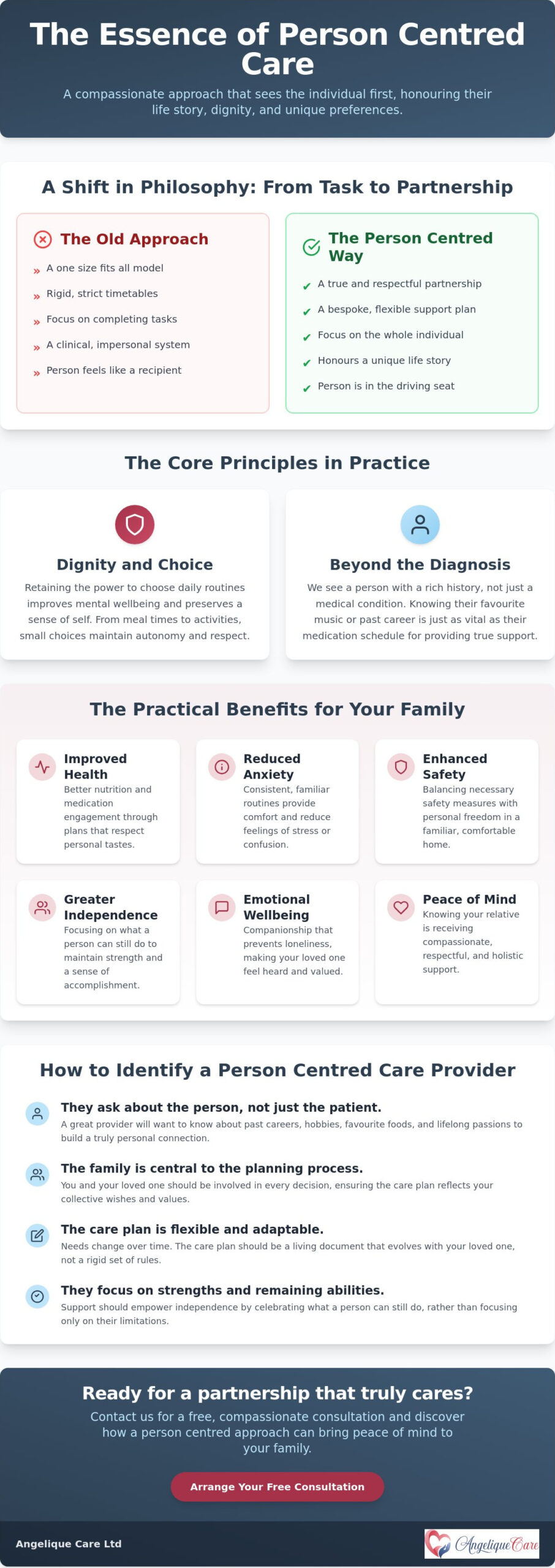
At its heart, this approach is a philosophy that puts the individual at the very centre of every decision. It moves away from a rigid one size fits all model where tasks are completed on a strict timetable. Instead, it focuses on building a bespoke support plan that respects a person’s unique history and daily preferences. For CQC registered providers across the UK, this approach is considered the gold standard. It ensures that care is not just something done to a person, but something created with them. Understanding What is person centred care? helps families see how professional support can actually enhance independence rather than take it away.
The core principles of dignity and choice
Dignity is not just a buzzword. It’s the foundation of quality care. When a person retains the power to choose their daily routines, their mental health and sense of self improve significantly. Respect plays a vital role in everything from medication management to personal care. Consider a resident in Ealing who prefers to eat dinner at 8pm rather than the standard 5pm. By honouring this simple preference, we maintain their autonomy whilst ensuring they feel comfortable. These small choices prevent a loved one from feeling like a passive recipient of a clinical service. It’s about keeping them in the driving seat of their own life.
Moving beyond a medical diagnosis
Effective support looks past a list of symptoms. Knowing a person’s favourite music or their past career is just as vital as knowing their medication schedule. This is especially true for those living with dementia. By focusing on remaining strengths and hobbies, we can reduce anxiety and promote engagement. We don’t just see a patient with a diagnosis. We see a person with a rich life story who still has much to contribute to their world. This focus on the individual helps maintain their identity even when health challenges arise.
The practical benefits of person centred home care for your loved one
Choosing person centred care transforms the experience of ageing from a clinical process into a supportive partnership. When a care plan is built around a person’s specific tastes and routines, they are far more likely to engage with their nutrition and medication. This active involvement leads to better physical health outcomes. It also provides families with profound peace of mind. Knowing that a professional is looking after your relative’s emotional needs as well as their clinical ones reduces the heavy weight of worry. This approach is essential for identifying person centred care that truly works for the whole family.
The advantages of this model extend beyond basic medical assistance. Families often notice several key improvements:
- Reduced anxiety through consistent and familiar routines.
- Improved nutrition through tailored meal preparation that respects personal tastes.
- Enhanced safety without compromising the individual’s personal freedom.
- Stronger emotional bonds between the carer and your loved one.
Enhancing independence and emotional wellbeing
Independence is often about what a person can still do for themselves. When providing mobility assistance, a compassionate carer encourages the individual to remain active rather than doing everything for them. This maintains physical strength and preserves a sense of accomplishment. You can read more about this in our Personal Care for Elderly at Home: A Comprehensive Guide to Independence (2026). Emotional support is equally vital. Regular companionship prevents the crushing loneliness that many seniors face, helping them feel heard and valued. It turns a standard visit into a highlight of their day.
Safety and comfort in a familiar environment
Home is where people feel most secure. A person centred approach balances necessary safety measures with the individual’s right to take calculated risks. This is particularly effective during hospital discharge care. Recovery is often faster and more successful when it happens in a preferred setting amongst familiar comforts. Since approximately 70% of care home residents in England live with dementia, many families prefer the tailored environment of their own house. Any plan for home care for elderly parents must start with these core values to be effective. If you are unsure how to begin this journey, you can speak with our friendly team today for guidance.
How to identify person centred care when choosing a London provider
Finding the right agency in a busy city like London can feel daunting. You need a partner that values your relative as a person rather than a set of tasks. Start by looking for providers that offer a free initial consultation to understand your loved one’s life story. This meeting is a vital opportunity to see if the agency prioritises individual preferences. A provider committed to person centred care will ask about their favourite meals or their past career. They should also explain how they match carers based on personality and shared interests rather than just who is available on the rota. This ensures a genuine human connection.
Tailored care plans and family involvement
A high quality care plan is never a static piece of paper. It is a living document that evolves as health or social needs change. You should expect regular reviews where the care manager actively seeks your feedback. This open communication ensures that the support remains relevant and effective. Whether your family is transitioning from basic domiciliary care to more intensive support, the process must involve the person receiving care at every stage. Your voice as a family member is essential for maintaining these high standards. It keeps the focus on what truly matters.
Local expertise in West and North London
Local knowledge is a significant advantage for families. An agency that understands the community in Ealing, Chiswick, or Fulham can help your relative stay connected to their world. They might know the best accessible local parks or community groups that align with your loved one’s hobbies. True person centred care keeps a person rooted in their familiar neighbourhood. This local focus helps maintain a sense of belonging. It prevents the feeling of being isolated within a vast city and ensures your relative remains a valued member of their local community. They stay connected to the places they love.
Empowering your loved one to live with dignity at home
Choosing the right support is a deeply personal decision that affects the wellbeing of your entire family. You now understand that person centred care is much more than a clinical requirement; it is a commitment to honouring your relative’s life story and daily choices. By focusing on individual strengths and preferences, this approach ensures that your loved one remains independent and connected to their community in West London. It replaces anxiety with confidence, knowing that their identity is respected and their voice is always heard.
As a CQC registered provider, Angelique Care Ltd maintains high standards of safety and compassion in every interaction. Our team brings specialist expertise in dementia and elderly care to families across Ealing, Chiswick, and Fulham. We are dedicated to maintaining dignity at home through tailored support that evolves as needs change. You don’t have to navigate this journey alone. Our friendly specialists are ready to help you create a plan that truly works for your relative.
Book a free consultation with Angelique Care Ltd to discuss a person centred plan for your family today. We look forward to supporting you with the expert care and respect your family deserves.
Frequently Asked Questions
What is the main difference between traditional care and person centred care?
The primary difference lies in the focus of the support provided. Traditional care often follows a rigid schedule of tasks such as washing or dressing at specific times regardless of the individuals mood or preference. Person centred care shifts this focus to the person themselves, ensuring that their unique history and current choices dictate how and when support is delivered. It moves away from a one size fits all model to a partnership where the individual remains in control of their daily life.
How can I tell if a care agency in London truly practises person centred care?
You can identify a genuine provider by looking at their initial assessment process. A dedicated agency will offer a consultation to learn about your loved ones life story and hobbies rather than just their medical needs. Ask how they match carers to clients and whether you will be involved in writing the care plan. Reliable London providers will demonstrate a clear commitment to matching personalities and interests to ensure a meaningful human connection between the carer and your relative.
Is person centred care more expensive than standard home care services?
This approach is a method of delivery rather than a specific price category. Whilst it requires more detailed planning and a higher standard of staff training, it often leads to better value by preventing health crises and improving overall wellbeing. Many families find that tailored support is more efficient because it addresses the specific needs of the individual without unnecessary or unwanted interventions. You should discuss your specific requirements during a consultation to understand how a bespoke plan works for your family.
Can person centred care help someone with advanced dementia?
Yes, this approach is highly effective for those living with advanced dementia. By focusing on sensory preferences and remaining strengths, carers can reduce distress and promote a sense of security. This method looks beyond the symptoms to find ways of communicating that respect the persons dignity. It allows individuals with dementia to feel safe and understood in their own home environment whilst receiving specialised support tailored to their specific behaviour and emotional needs.