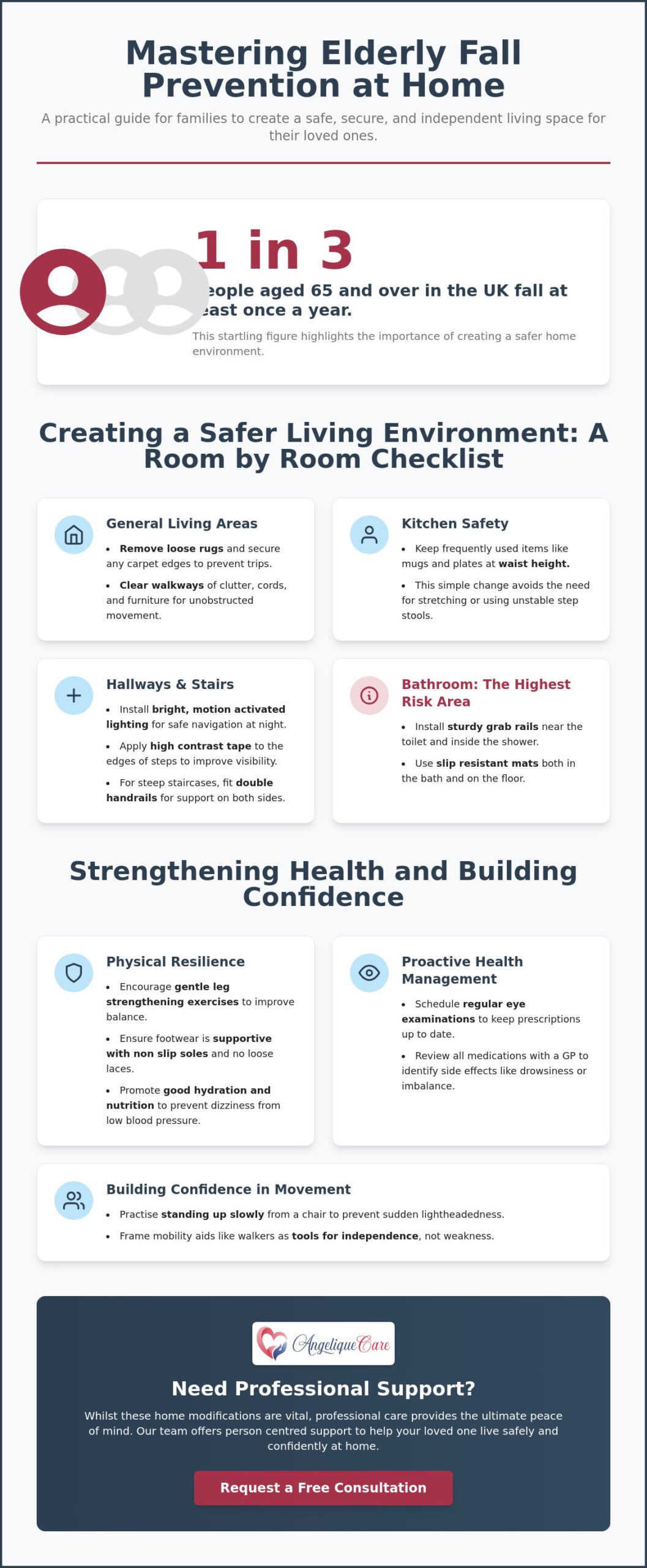
Did you know that around a third of people aged 65 and over in the UK fall at least once every year? It is a startling figure that often keeps families awake at night, wondering if a loved one is truly safe whilst they are home alone. You want your parent to stay in the house they love, yet you worry about every loose rug or steep staircase they encounter daily. It is natural to feel torn between wanting to protect them and wishing to respect their hard won independence.
This guide will show you how to master elderly fall prevention at home by making smart, practical changes that secure their environment without turning it into a clinical space. You will discover how to identify necessary home modifications and find ways to introduce mobility aids that your loved one will actually feel comfortable using. We will walk through a clear plan to improve their confidence and ensure their living space remains a sanctuary of safety for the long term.
Key Takeaways
- Learn how to secure every room by removing common trip hazards such as loose rugs and ensuring walkways remain clear for easy movement.
- Discover how simple modifications like high contrast tape on stairs can significantly improve visibility and support elderly fall prevention at home.
- Understand the vital role that regular eye tests and gentle leg exercises play in maintaining balance and long term physical health.
- Explore the benefits of professional mobility assistance to ensure safe transfers between rooms and provide peace of mind for the whole family.
Creating a safer living environment room by room
Securing the home is the first step toward true peace of mind. Most accidents happen in familiar spaces where we feel most relaxed. Effective elderly fall prevention at home begins with a thorough walk through of every room to identify hidden dangers. Start by removing loose rugs and cluttered walkways; these are the primary culprits for stumbles. In the kitchen, place frequently used items like teabags and mugs at waist height. This simple change eliminates the need for stools or precarious reaching.
Visibility is equally vital for safety. Hallways and stairwells should have bright motion activated lighting to guide the way during the night. For those with fading sight, applying high contrast tape to the edges of stairs provides a clear visual cue that prevents missteps. This proactive approach is part of a comprehensive guide to fall prevention that prioritises dignity alongside safety. It allows your loved one to move with confidence rather than fear.
Securing bathrooms and bedrooms for daily safety
The bathroom is often the highest risk area due to wet surfaces. Install sturdy grab rails near the toilet and inside the shower to provide reliable balance. Use slip resistant mats both inside and outside the bath to manage moisture safely. In the bedroom, keep a telephone or alert button within easy reach of the bed. This ensures help is always accessible during night time emergencies. Our team often suggests personal care for elderly at home to assist with these delicate morning routines and provide physical steadying.
Managing unique London home layouts
Many families in Ealing or Hanwell face challenges with steep, narrow staircases in older Victorian properties. In these homes, installing double handrails provides essential support on both sides. Clear narrow entrances of shoes and umbrellas to ensure a wide path for mobility frames. These small adjustments make a significant difference in maintaining a safe and accessible environment whilst respecting the character of a cherished family home.
Strengthening physical health and managing medications
Physical resilience is a cornerstone of elderly fall prevention at home. Whilst environmental changes are essential, maintaining strength and balance provides the body with its own internal safety net. Encourage your loved one to participate in gentle weight bearing exercises. These movements build leg strength and improve stability during daily tasks. Regular eye examinations are also a priority to ensure prescriptions are current and cataracts are monitored. Clear vision allows for better navigation of the home. Don’t forget to review footwear; shoes should be supportive with non slip soles and no loose laces to ensure a steady gait.
Proper hydration and nutrition play a significant role in preventing sudden drops in blood pressure. Dizziness is a common cause of stumbles, so ensure your relative drinks plenty of fluids throughout the day. Using a home safety checklist can help you track these daily health habits alongside physical modifications. Maintaining a consistent routine of healthy meals and water intake keeps energy levels stable and minds alert.
The role of medication management in fall safety
Many prescriptions can cause side effects like drowsiness or a lack of balance. It’s vital to review all medications with a GP to identify potential risks. Implementing a clear system for medication management at home helps avoid dosage errors that could lead to instability. Always monitor for side effects after any change in pills or health routines. Families managing complex schedules from a distance may also benefit from professional medication reminders to ensure doses are never missed and the risk of instability is kept to a minimum. If you feel overwhelmed by these schedules, you can speak with our specialist team for professional guidance.
Encouraging active movement and confidence
Confidence is just as important as physical strength. Support the use of walking aids by framing them as tools for independence rather than symbols of ageing. Practise standing up from a seated position slowly to avoid postural hypotension and fainting. This simple habit allows the body time to adjust and prevents the sudden lightheadedness that often leads to a fall. By focusing on these proactive steps, you help your loved one feel capable and secure in their own space.
Professional support and mobility assistance in London
Whilst home modifications form a solid foundation, professional intervention provides the final layer of security for families. Introducing personal care for elderly at home ensures your loved one has physical steadying during high risk moments like morning routines or bathing. Expert mobility assistance is also available to help with safe transfers between beds, chairs, and bathrooms. This hands on support is a vital part of elderly fall prevention at home because it offers immediate help when balance is most fragile.
For those with a higher risk of wandering or confusion, live in care offers constant supervision and reassurance. You can also implement simple technology like floor sensors or wearable pendants. These tools allow for a rapid response if a trip occurs, ensuring help is never far away. This proactive approach helps maintain dignity whilst keeping safety as the primary focus.
How domiciliary care reduces fall risks
Professional carers are trained to spot and remove hazards before they cause an accident. They identify new risks like water spills or mail left on the floor immediately. Regular companionship also plays a role; it reduces the rush to answer the door or telephone which frequently leads to stumbles. If a relative is returning from surgery, our staff provide hospital discharge support services to manage the recovery period safely and effectively.
Tailored support in West and North London
Families in areas like Acton and Chiswick benefit from local expertise and person centred care plans. Our carers understand the community and provide emotional reassurance alongside physical help. This local presence ensures we are always ready to respond to the unique needs of your family with empathy and skill. Dedicated local support is a key pillar of elderly fall prevention at home that allows seniors to stay in the homes they love.
Securing a brighter and safer future for your loved one
Ensuring the safety of a relative is a journey that combines practical home modifications with proactive health management. By addressing environmental hazards room by room and encouraging physical strength, you create a space where independence can truly flourish. Professional support acts as the final piece of the puzzle, providing the expert steadying hand needed during the most vulnerable moments of the day.
At Angelique Care Ltd, we are a CQC registered provider with deep expertise in dementia and mobility support. Our compassionate staff serve families across West and North London, bringing peace of mind to those who need it most. We understand that elderly fall prevention at home is about more than just safety; it is about preserving the dignity and joy of living in a familiar environment.
Take the first step toward a more secure home life today. Book your free home safety consultation with Angelique Care Ltd today and let us help you build a clear plan for your loved ones well being. We are always ready to guide you through this process with professional skill and genuine human empathy.
Frequently Asked Questions
What are the most common causes of falls at home for seniors?
Common causes of falls amongst seniors often involve a combination of environmental and physical factors. Trip hazards like loose carpets, cluttered walkways, and poor lighting are frequent culprits in the home. Additionally, physical issues such as fading eyesight, reduced leg strength, and side effects from medications significantly increase the risk. Addressing these varied factors is a vital part of elderly fall prevention at home to ensure a secure living environment.
How can I make a bathroom safer for an elderly person quickly?
To make a bathroom safer quickly, focus on installing grab rails and improving surface grip. Place non slip mats both inside and outside the bath or shower to manage wet floors effectively. You should also ensure the area is brightly lit to help with navigation during the night time. These immediate modifications provide reliable physical support and help prevent common stumbles in one of the most high risk areas of the house.
Does exercise really help prevent falls in older adults?
Exercise is a powerful tool for maintaining balance and preventing accidents. Targeted movements like gentle weight bearing exercises and leg stretches build the muscle strength necessary for steady movement. Regular activity also improves coordination and reaction times, which helps older adults recover their balance if they do trip. Beyond the physical benefits, staying active increases confidence and allows seniors to navigate their homes with a greater sense of security.
When should we consider professional home care for fall safety?
You should consider professional home care when a loved one requires more supervision than the family can provide alone. This is especially important after a hospital stay or if an elderly relative has a high risk of wandering. Our team offers person centred care that includes physical steadying and constant monitoring. This professional level of elderly fall prevention at home ensures that safety is maintained whilst your loved one enjoys the comfort of their own house.