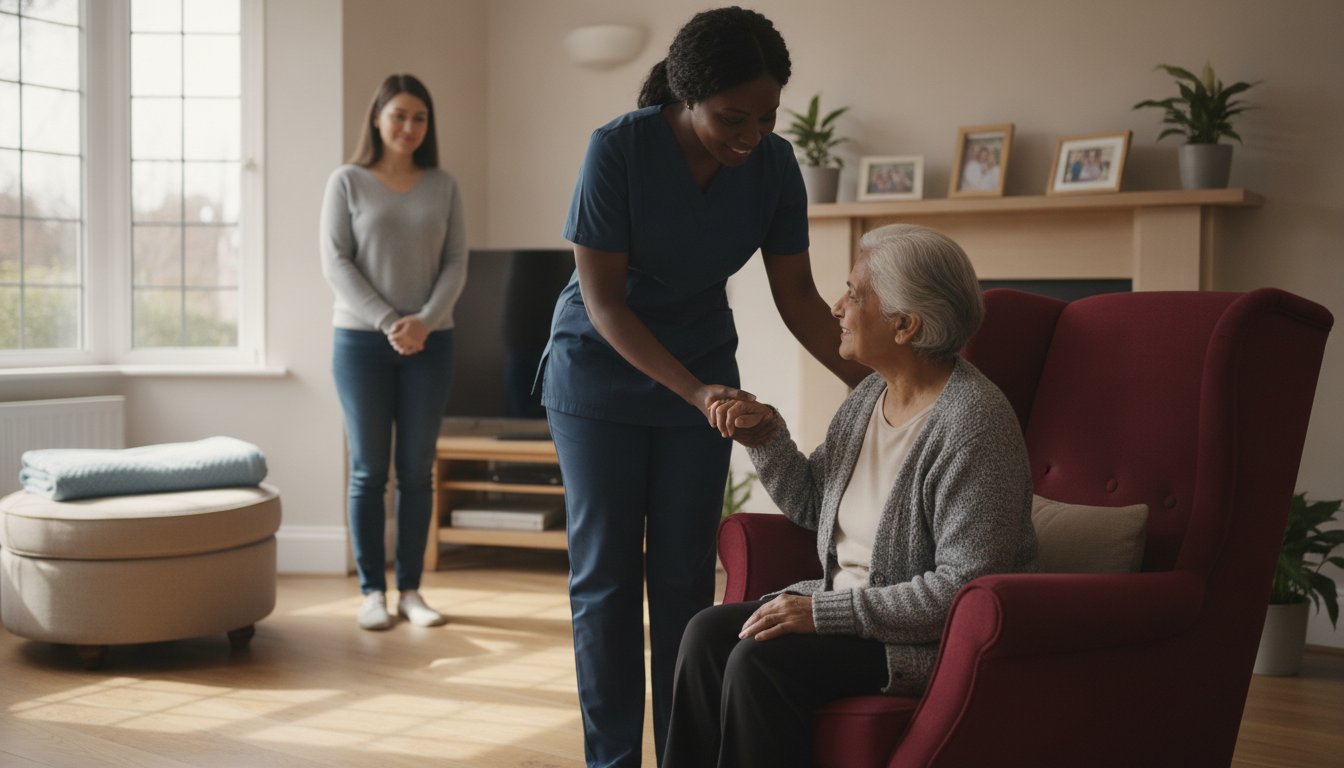
Imagine the moment the doctor says your mother is ready to leave the ward. Whilst it should be a relief, you might feel a sudden wave of worry about how you will manage her care alongside your own job and family. You are not alone in feeling this way. Many families find that transitioning from hospital to home is more complex than they first expected. The fear of a quick readmission or the confusion of a busy discharge process can feel overwhelming when you just want your loved one to be safe and comfortable in their own bed.
We understand that 2026 brings a continued shift towards recovering in familiar settings rather than clinical wards. This guide provides the essential steps you need to take for a successful recovery. You will discover how to prepare a safe environment and how to organise professional support that fits into your daily life. We will walk you through the discharge checklist and show you how to bridge the gap between clinical care and a peaceful home life. Our goal is to ensure your relative feels supported whilst you regain your peace of mind and focus on their well being.
Key Takeaways
- Start the discharge conversation early with the hospital team to ensure a clear timeline and a thorough assessment of care needs.
- Prepare a safe environment by removing trip hazards and organising a ground floor living space to prevent accidents.
- Understand how professional support makes transitioning from hospital to home safer by providing expert help during the critical first weeks.
- Explore the benefits of live in care for those who require constant monitoring to remain safe and comfortable.
- Implement practical strategies to balance your own work commitments whilst ensuring your loved one receives high quality care.
Preparing for the transition whilst in hospital
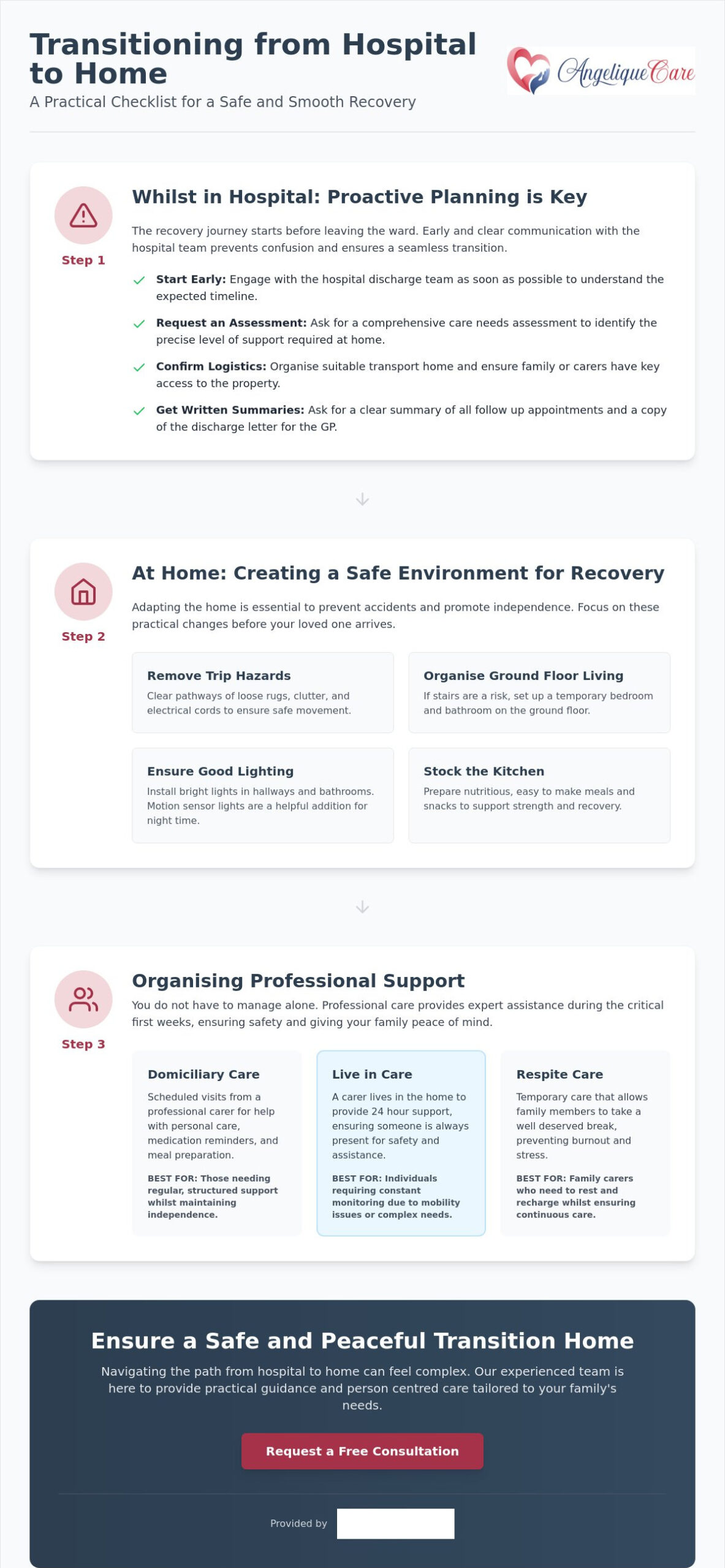
The recovery process begins long before your relative leaves the hospital ward. To ensure a smooth journey when transitioning from hospital to home, you must be proactive from the first day of admission. Engaging with the hospital discharge team early allows you to understand the expected timeline and manage your own work or family commitments. It is vital to request a comprehensive care needs assessment as soon as possible. This assessment identifies the precise level of support required, ranging from simple housekeeping to more complex medication management.
You should also confirm that practical logistics are ready well in advance. This includes organising suitable transport and ensuring that family members or professional carers have key access to the property. Ask for a clear, written summary of all follow up appointments and medical reviews before the patient is discharged. Gaining a deeper level of understanding transitional care helps you bridge the gap between clinical settings and the comfort of home. This knowledge empowers you to advocate for the best possible outcomes for your loved one.
Coordinating with the discharge team
Identify your main point of contact immediately. This person is usually a discharge coordinator or a social worker who understands the system. They act as your primary guide through the hospital bureaucracy. Ask specific questions about mobility and whether any new equipment, such as a walking frame or a hospital bed, is necessary for safety. Verify that a copy of the final discharge letter will be sent to the GP. This ensures that the local medical team is ready to provide ongoing support without any delay. Clear communication at this stage prevents confusion whilst you prepare the house. It allows you to focus on your relative’s comfort rather than chasing missing paperwork. Professional support agencies often work alongside these teams to ensure every detail is covered during the move.
Creating a safe home environment for recovery
A safe dwelling is the foundation of a successful recovery. When transitioning from hospital to home, you must look at your relative’s living space through a lens of safety and accessibility. Many London homes feature narrow hallways or steep stairs that can become significant obstacles. It is essential to adapt the environment before your loved one arrives to prevent accidents and reduce anxiety for the whole family.
To create a secure space, focus on these immediate practical changes:
- Remove trip hazards such as loose rugs and any clutter from main walking paths.
- Organise a ground floor living space if stairs pose a significant safety risk during the first few weeks.
- Ensure adequate lighting in hallways and bathrooms to prevent evening falls; motion sensor lights are often a helpful addition.
- Stock the kitchen with nutritious and easy to prepare meals to maintain strength without the stress of complex cooking.
Creating this environment doesn’t have to be a solo task. If you feel unsure about the layout of your home, our team can provide practical guidance on home safety. We focus on making sure every room supports independence whilst maintaining the highest standards of safety for your relative.
Managing daily essentials and medication
Maintaining a strict medication schedule is vital for a safe return. You need a reliable system to ensure every dose is taken at the correct time. Many families find that using a clear pill organiser or a written log reduces confusion and prevents errors. We recommend coordinating with local pharmacies in Ealing or Hanwell to set up regular prescription deliveries. This removes the burden of travel and ensures supplies never run low. For those recovering from more intensive procedures, you can find specialized advice in our guide on at home care after surgery West London. It’s a way to ensure their physical needs are met whilst you focus on providing the emotional support they need to heal.
Professional support for a smooth transition home
Transitioning from hospital to home often requires more than just family support. Bringing in professional domiciliary care provides expert assistance during those vital first weeks. These specialists help with personal care and medication whilst you focus on emotional support. If your relative requires constant 24 hour monitoring for their safety, you might assess the need for live in care. This ensures someone is always present to assist with mobility or sudden health changes. We also recommend utilising respite care to allow family members to rest. Caring for a loved one is demanding, and taking a break ensures you can continue to provide high quality support without becoming exhausted.
During the initial recovery phase, it is crucial to monitor for any signs of physical or emotional decline. Look for changes in appetite, mood, or energy levels. Early intervention prevents minor issues from turning into major setbacks. Our team is trained to spot these subtle shifts and act quickly to keep your relative safe. We believe that a watchful eye and a compassionate heart are the best tools for a successful recovery at home.
How person centred care promotes independence
True recovery happens when support is tailored to the specific routines and preferences of the individual. This person centred approach respects dignity and encourages progress. You can refer to our comprehensive guide to hospital discharge support services in London 2026 for more detail on these options. We focus on clear reablement goals that help your loved one regain their confidence and independence. By gradually reducing support as they get stronger, we help them return to their favourite activities and daily life with pride. This method ensures that the transition is not just about safety, but about returning to a fulfilling life amongst family and friends.
Securing a bright future for your loved one at home
Recovering at home is a journey that requires careful planning and a compassionate touch. By starting the conversation with the hospital team early and making simple safety changes to the living space, you create a solid foundation for health. Transitioning from hospital to home becomes a much more manageable process when you have the right expertise by your side. Professional support ensures that clinical needs are met whilst personal dignity remains a priority at all times.
As a CQC registered provider, our responsive local team across West London is always ready to assist. We are specialists in dementia and elderly care, providing the reliable partnership your family deserves during this sensitive time. You don’t have to navigate these choices alone. We invite you to contact Angelique Care Ltd for a free hospital discharge consultation to discuss your specific needs. Our goal is to help your relative regain their independence in the house they love. You can look forward to a safe and peaceful recovery for your loved one.
Frequently Asked Questions
What is the hospital discharge process in the UK?
The UK discharge process involves a thorough assessment of a patient’s medical and social requirements before they are allowed to leave the ward. Planning ideally begins at the point of admission to ensure all needs are identified early. A multidisciplinary team reviews whether the individual is medically fit and what level of support is required for transitioning from hospital to home. This ensures that a safe care plan is active before the patient departs.
How can I prepare my home for a relative leaving hospital?
Preparation involves removing physical obstacles and ensuring the home is warm and accessible for your relative’s return. You should clear away loose rugs and clutter that could lead to falls in hallways or living areas. If stairs are a concern, you might arrange a temporary living space on the ground floor. Ensuring the kitchen is stocked with nutritious meals allows your loved one to focus entirely on their recovery without the stress of chores.
What happens if someone is not ready to leave hospital?
If a patient is not medically stable or their home is not yet safe, the hospital team must delay the discharge. You can voice your concerns to the discharge coordinator if you feel the current plan is unsafe or premature. The team might then look at alternative options such as a short stay in a rehabilitation unit. This ensures your relative only returns home when they are physically capable and the right support is fully organised.
Is there support available for medication management after discharge?
Professional domiciliary care providers offer specialised medication management to ensure all prescriptions are taken safely and according to the doctor’s instructions. This support is essential for preventing errors that could cause health setbacks or readmission. Carers can help with reminders, opening difficult packaging, and keeping accurate records of each dose. This service provides peace of mind for families whilst ensuring the individual remains safe during the period of transitioning from hospital to home.